India's Central Bank Renews Push to Cut Off Banking Sector from Crypto Exposure
RBI's containment strategy targets bank-crypto interface at a time when India holds the top global position for crypto adoption — per Chainalysis's 2025 index.
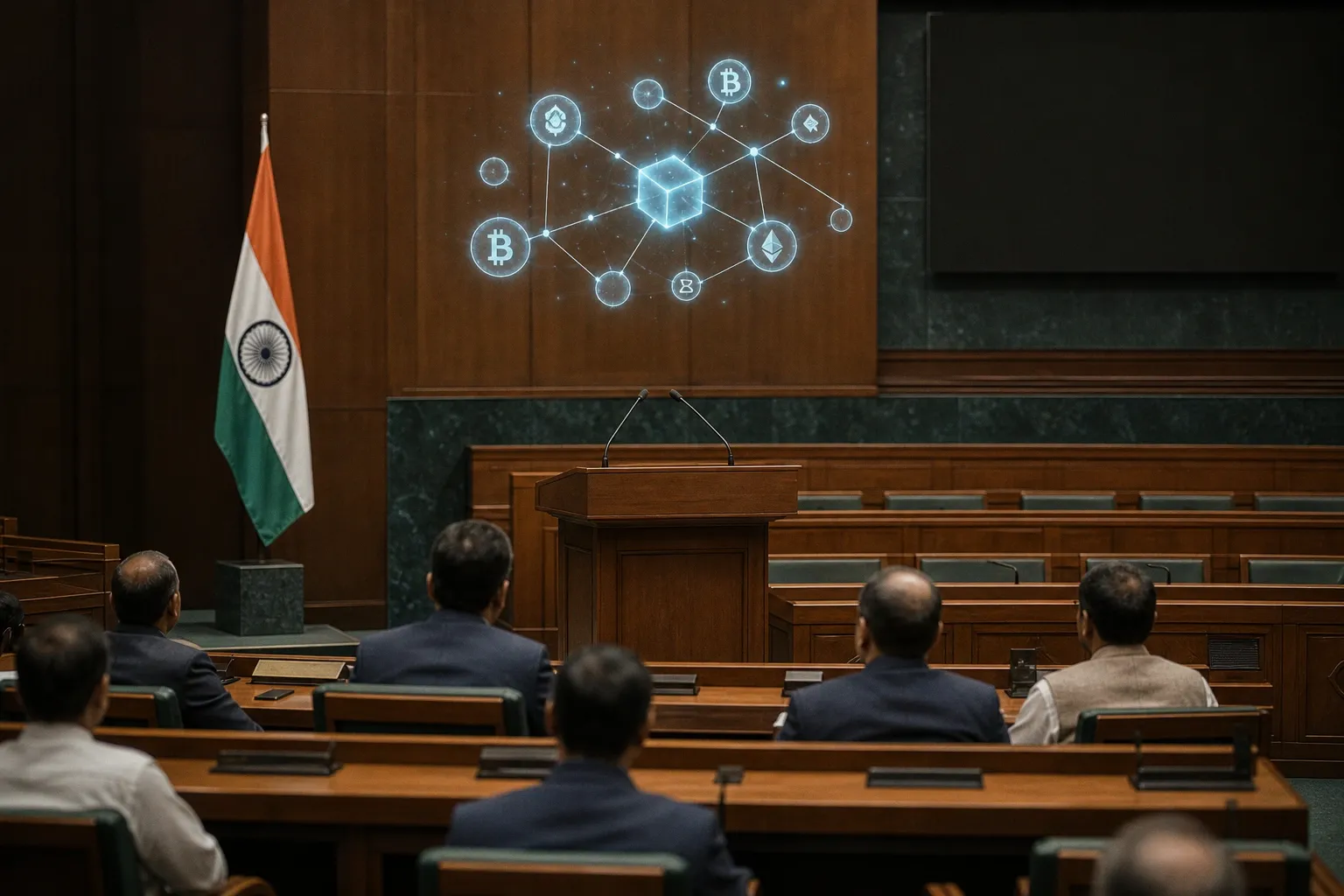
The Mechanics of Containment
Reserve Bank of India Deputy Governor Rohit Jain and Executive Director P. Vasudevan presented the central bank's position to Parliament's Standing Committee on Finance. The submitted background report carries a direct policy recommendation: prohibit crypto assets for payments and settlements; restrict banking sector exposure to such assets.
The language is explicit — "a ban remains a recognized policy option." The RBI further argues that applying existing financial regulation to crypto instruments could create a false safety perception among users, effectively legitimizing speculative assets through regulatory proximity.
Notably, the central bank draws a line between crypto assets and tokenized regulated financial products — specifically government bonds and corporate bonds. This carve-out suggests the RBI views tokenization infrastructure as distinct from speculative digital asset markets, a distinction that could matter for NFT-adjacent platforms exploring real-world asset integrations.
2018 Redux — With a Known Outcome
The current playbook mirrors the RBI's April 2018 circular, which directed regulated institutions to cease all crypto-related services. That directive did not ban individuals from holding or trading crypto, but it severed fiat banking access for exchanges — a liquidity chokepoint that crippled operations.
India's Supreme Court invalidated the circular in March 2020 on proportionality grounds, ruling the RBI had not demonstrated specific harm to regulated entities. By May 2021, the RBI itself clarified that banks could no longer cite the defunct circular as justification for restricting customer crypto transactions. AML, KYC, and forex obligations remained intact.
The current push carries the same structural approach. Whether it survives legal scrutiny a second time depends on legislative framing — and India's comprehensive crypto legislation remains delayed despite years of tax enforcement on digital asset transactions.
Liquidity Risk Assessment for Indian NFT Marketplaces
The data points to a clear exposure profile for any platform dependent on Indian fiat rails:
- Banking dependency: Any marketplace or exchange operating INR on-ramps faces direct counterparty risk if RBI restrictions materialize at the institutional level.
- Adoption paradox: India's #1 ranking on Chainalysis's adoption index — which the RBI has publicly challenged on methodology — implies high transaction volume flowing through exactly the channels the central bank seeks to constrain.
- Regulatory arbitrage window: The RBI's explicit carve-out for tokenized regulated products creates a narrow but defined lane for compliant tokenization activity separate from open crypto markets.
Actionable takeaway: Platforms with Indian user bases should stress-test fiat settlement dependencies. The pattern from 2018 shows the RBI moves fast on institutional directives before legal challenges can be mounted. Liquidity fragmentation — reduced order book depth, wider spreads, withdrawal friction — is the first observable metric when banking access tightens. Monitor Indian exchange premium/discount spreads against global benchmarks as an early signal of on-ramp constriction.