Jupiter Launches 'Jupiter Gacha' for Tokenized Pokémon and One Piece Cards
Jupiter has moved tokenized collectibles one step closer to exchange-native trading.
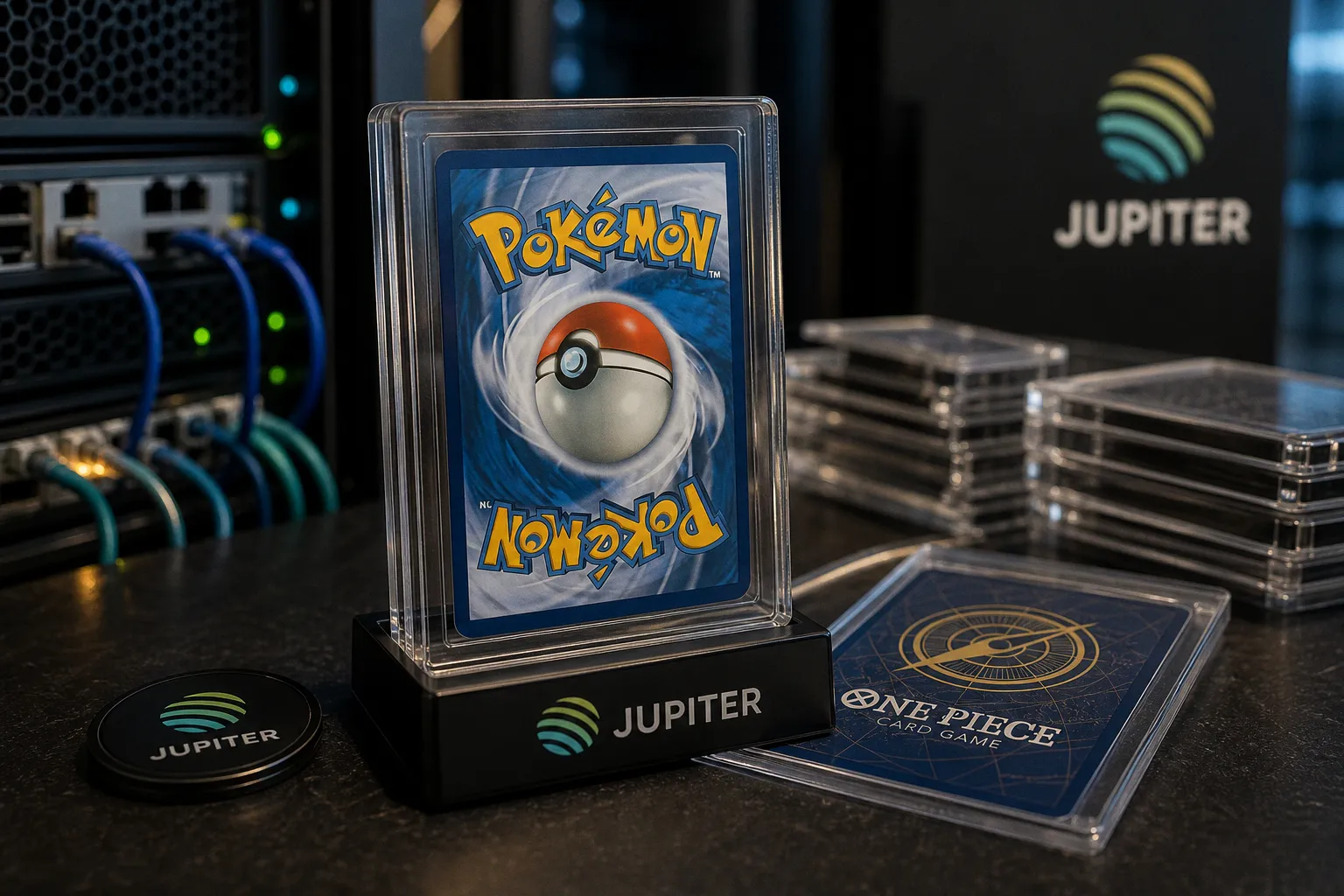
A collectible pull becomes a tradable token
Jupiter Gacha launched on July 13, 2026, according to the source material. The product lets buyers pull randomized packs containing real, graded Pokémon or One Piece cards. Each card is physically authenticated, sealed in a plastic slab, and represented by an onchain token.
The market structure is simple:
- The buyer purchases a random pack.
- The underlying asset is a graded physical card.
- The card is represented onchain.
- The token can trade through Jupiter’s Solana-based exchange infrastructure.
That matters because most NFT marketplaces still separate the collectible interface from deep trading rails. Jupiter is approaching the problem from the other direction: start with a DEX, then introduce tokenized real-world collectibles into that liquidity environment.
The beta label is material. It means the venue is still being refined. It also means traders should treat current activity as early market formation, not proof of mature demand.
Why the marketplace signal is different
Tokenized Pokémon cards are not new. The source notes that platforms such as Collector Crypt and Courtyard have already been active in onchain Pokémon card trading. The difference is Jupiter’s position inside Solana’s trading stack.
A major DEX can change the mechanics around:
- Order routing
- Secondary-market liquidity
- Slippage visibility
- Token discovery
- Wallet-native trading behavior
The core inefficiency in tokenized physical collectibles is not only authentication. It is market depth. A token can represent a real asset, but if bids are thin, the exit path is weak. Jupiter’s value proposition depends on whether its existing user base and exchange integrations can compress that gap.
The Gacha format also changes buyer behavior. Users are not selecting a specific card; they are buying exposure to a randomized pull. That preserves the pack-opening mechanic of physical collecting but turns the post-pull asset into a tradable onchain position. For marketplace participants, this creates two different markets: the primary random-pack market and the secondary token market for individual cards.
Those markets should be evaluated separately.
What traders should verify before touching liquidity
The data indicates a useful checklist rather than a buy signal.
Before trading Jupiter Gacha assets, users should check:
- Redemption rules: how the physical slab is claimed, stored, transferred, or delivered.
- Token-to-card mapping: whether the token clearly identifies the graded card it represents.
- Marketplace depth: number of active bids and asks, not just listed supply.
- Spread quality: wide bid-ask spreads can erase the benefit of instant trading.
- Exit liquidity: whether comparable cards have repeatable secondary-market activity.
- Custody assumptions: who holds the physical card before redemption or transfer.
The AscendEX shutdown reported in separate market coverage is a useful risk parallel, even though it is not the same business model. That exchange halted trading, deposits, staking, and swap services, while remaining withdrawals moved into manual review. The lesson is basic: platform access and asset ownership are not identical. For tokenized physical collectibles, custody terms are part of the trade.
Jupiter’s broader positioning also matters. The source notes that Securitize selected Jupiter to assist with regulated tokenized equities on Solana. That does not validate Gacha liquidity by itself. It does show that Jupiter is positioning around real-world assets, not only crypto-native tokens.
The practical takeaway is narrow: treat Jupiter Gacha as an early Solana RWA marketplace experiment with physical-card collateral and DEX-native execution. The key thresholds are clear custody, verifiable token mapping, and real secondary bids. Without those, the product is a collectible interface, not a liquid marketplace.